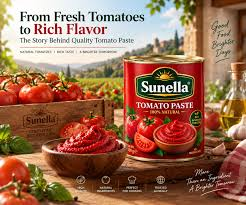

Restaurants and catering businesses operate in an environment where consistency, efficiency, and ingredient availability are extremely important. Customers expect familiar flavors every time they order a dish, while kitchen teams need ingredients that can be prepared and incorporated into recipes efficiently.
Tomatoes are central to many cuisines around the world. They appear in pasta sauces, pizza, soups, stews, curries, marinades, and countless other dishes. For commercial kitchens, Canned tomato paste offers a convenient way to add concentrated tomato flavor to recipes without processing fresh tomatoes from the beginning.
Why Restaurants Use Tomato Paste
Commercial kitchens have to manage time carefully. Preparing fresh tomatoes for every sauce or dish can require washing, cutting, cooking, and reducing the ingredients before they are ready.
Tomato paste simplifies this process.
Because it is concentrated, chefs can add a measured quantity to a recipe and combine it with other ingredients. This can reduce preparation time and help kitchens maintain consistent recipes during busy service periods.
For restaurant groups with standardized menus, this consistency can also help different locations follow similar preparation methods.
A Versatile Kitchen Ingredient
One of the biggest advantages of tomato paste is its versatility.
A single ingredient can be used in multiple menu categories. It can contribute depth to a pasta sauce, provide a tomato base for pizza, enrich soups, or add color and flavor to stews.
Chefs can combine tomato paste with onions, garlic, herbs, spices, vegetables, meat, or other ingredients to create different sauces and dishes.
This versatility makes it practical for restaurants that want to maximize the usefulness of their inventory.
Supporting Consistent Recipes
Consistency is one of the most important aspects of restaurant operations.
If a customer orders the same dish twice, they generally expect the flavor and appearance to be similar. This becomes even more important for restaurant chains operating across different cities or countries.
Using standardized ingredients can make recipe management easier. Instead of relying entirely on the characteristics of fresh tomatoes, kitchens can work with a prepared tomato ingredient with defined product specifications.
This can make it easier for culinary teams to measure ingredients and reproduce recipes.
Foodservice Packaging
Restaurants and catering businesses have different consumption levels.
A small café may use relatively modest quantities of tomato paste, while a hotel kitchen or catering company may require much larger volumes.
For this reason, packaging size should be considered carefully. Smaller cans may be practical for businesses with lower consumption, while larger formats can be more suitable for high-volume operations.
Redora Foods offers canned tomato paste in multiple formats, including both smaller and larger commercial sizes.
Tomato Paste for Pizza Businesses
Pizza restaurants are among the businesses that can benefit from reliable tomato ingredients.
Tomato-based pizza sauces need to deliver consistent flavor and texture. A standardized tomato ingredient can help kitchens reproduce their sauce recipes more consistently.
Pizza operators may also need ingredients that can be purchased in sufficient quantities to support regular production.
For businesses operating multiple pizza locations, maintaining the same ingredient specifications across restaurants can simplify purchasing and recipe management.
Tomato Paste for Pasta Sauces
Pasta is another major application.
Tomato paste can serve as a concentrated foundation for many different pasta sauces. It can be combined with herbs, vegetables, garlic, meat, cheese, and other ingredients depending on the recipe.
Because tomato paste has a concentrated flavor, it can help develop a rich tomato profile without requiring large amounts of fresh tomatoes.
Catering and Large Events
Catering companies often need to prepare large quantities of food within a limited time.
This makes ingredient efficiency particularly important. Tomato paste can be useful for preparing sauces, soups, stews, and other dishes for large groups.
Bulk purchasing can also help catering companies maintain adequate inventory for scheduled events.
However, buyers should plan quantities carefully and select packaging that fits their preparation volume and storage capabilities.
Storage and Inventory Planning
Restaurants need to manage their inventories carefully because food waste can affect profitability.
When purchasing tomato products, businesses should consider consumption rates, storage space, ordering frequency, and packaging size.
Buying a format that matches actual consumption can help make inventory management more efficient.
Foodservice operators should also follow appropriate food-handling and storage procedures after opening any packaged ingredient.
Selecting a Commercial Supplier
A reliable supplier can make a significant difference for restaurant and catering businesses.
When comparing suppliers, buyers should evaluate product specifications, packaging options, supply capacity, documentation, and communication.
For international purchasing, shipping coordination and export documentation may also be important.
Redora Foods works with importers, distributors, foodservice companies, and private-label brands and provides international supply support.
Private Label Opportunities for Food Businesses
Some food businesses want to create their own branded products.
Private-label tomato paste can allow distributors, retailers, and food companies to develop products under their own brand names. Packaging and label customization can help these products fit specific markets.
OEM solutions can also be useful when a buyer has particular requirements regarding packaging, product specifications, or branding.
Quality Considerations
Restaurants should not evaluate tomato paste based solely on appearance or price.
Commercial buyers may need to consider Brix, consistency, color, pH, packaging integrity, and other specifications depending on their application.
Redora Foods states that quality-control information and product specifications can be provided according to product and order requirements.
Understanding these specifications can help professional buyers select products that fit their recipes and production requirements.
Conclusion
Tomato paste is a practical ingredient for modern restaurant and catering operations. Its concentrated nature, versatility, convenient packaging, and broad range of applications make it useful for everything from pizza and pasta to soups, sauces, and prepared meals.
For commercial buyers, choosing the correct packaging, product specification, and supply partner can improve purchasing and kitchen efficiency.
Restaurants, catering companies, and distributors looking for a dependable tomato ingredient can explore the available Canned tomato paste range. If you want to learn more about tomato products and commercial supply options, Visit us here https://redorafoods.com/