

The transition into higher education is often marketed as a journey of intellectual discovery, but for most undergraduate students, it feels more like a high-stakes balancing act. Between grueling lecture schedules, the pressure of maintaining a competitive GPA, and the necessity of a social life, the “student lifestyle” can quickly descend into a cycle of burnout. Designing a lifestyle that accommodates these demands requires more than just a calendar; it requires a fundamental shift in how you value your time and energy.
When the syllabus begins to pile up and deadlines for complex modules converge, the mental load can become paralyzing. It is at this intersection of ambition and exhaustion that many students realize they cannot do everything alone. Recognizing when to delegate technical tasks or seek expert guidance is a hallmark of a professional mindset. For instance, when a capstone project or a difficult research paper threatens to derail your entire semester, choosing to help me with my assignment becomes a strategic move to preserve your mental health and focus on core learning objectives. This isn’t about avoiding work; it’s about managing resources so you can excel in the areas that matter most.
The Pillar of Academic Sustainability
Sustainability in a degree program isn’t just about passing the next exam; it’s about ensuring you have the cognitive energy to finish the final year with the same vigor you had in the first week. Most students fall into the trap of “grind culture,” believing that four hours of sleep and caffeine-fueled study sessions are badges of honor. In reality, this approach leads to diminishing returns.
To design a sustainable lifestyle, you must treat your brain like a high-performance instrument. This involves:
- Circadian Alignment: Studying during your peak alertness hours rather than forcing midnight sessions.
- Nutritional Support: Moving away from the “starving student” trope and fueling with brain-healthy fats and proteins.
- Active Recovery: Engaging in hobbies that have nothing to do with your degree to prevent “academic tunnel vision.”
The Strategic Student Productivity Matrix
To help visualize how to allocate your effort, consider the following matrix. It helps distinguish between tasks that require your absolute presence and those that can be managed through external tools or support.
| Task Category | Priority Level | Management Strategy |
| Core Major Exams | Critical | Deep work sessions, no distractions. |
| Skill Labs/Practicals | High | Hands-on participation and peer review. |
| General Electives | Medium | Efficient note-taking and group study. |
| Administrative/Formatting | Low | Strategic outsourcing or AI formatting tools. |
| Soft Skill Development | High | Public speaking workshops and networking. |
Developing the Professional Persona
As you navigate the middle of your degree, the focus often shifts from internal study to external representation. You are no longer just a student; you are a professional-in-training. This transition requires a specific set of soft skills that aren’t always taught in a science lab or a history seminar. Communication is the bridge between your academic knowledge and your future career.
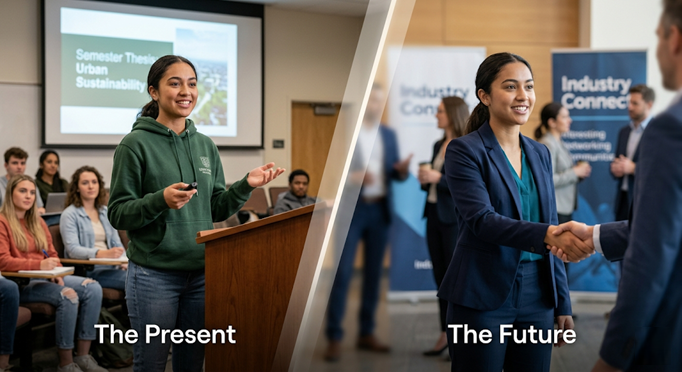
One of the most vital skills you can develop during this period is the ability to introduce yourself with confidence in high-pressure environments, such as internships or networking mixers. Crafting a compelling self introduction speech with the guidance of experts at MyAssignmentHelp can differentiate you from hundreds of other applicants. This specific brand of support focuses on the nuances of tone, structure, and personal branding, ensuring that when you speak, your audience sees a leader rather than just a candidate. Developing this skill in the middle of your academic journey ensures that by the time graduation rolls around, your “elevator pitch” is second nature.
Mastering the Art of Selective Focus
The secret to ranking at the top of your class—and eventually in your career—is the “80/20 Rule.” Roughly 80% of your results will come from 20% of your activities. Many students spend 80% of their time on low-impact tasks, such as re-reading highlighted textbooks or obsessing over the font of a bibliography.
A high-stakes lifestyle demands that you ruthlessly prioritize the 20%. This means mastering the “Deep Work” philosophy popularized by Cal Newport. Deep work is the ability to focus without distraction on a cognitively demanding task. It’s a superpower in our increasingly distracted world. By carving out three-hour blocks of uninterrupted time, you can accomplish more than a student who spends twelve hours “semi-studying” with their phone nearby.
Integration of Social and Academic Life
A common mistake is viewing social life as the “enemy” of academic success. In a globalized student environment, your peers are your future colleagues, business partners, and references. Designing a lifestyle that accommodates degree demands must include “Social-Academic Integration.”
This looks like:
- Forming High-Level Study Groups: Where the goal is teaching each other concepts rather than just sharing answers.
- Networking via Societies: Joining clubs related to your major to see the real-world application of your studies.
- Scheduled Leisure: Treating a Friday night out as a non-negotiable “reset” button that earns you the right to work hard on Monday.
The Global Perspective: Why Tone Matters
In today’s academic world, you aren’t just competing with the person sitting next to you in the lecture hall; you are part of a global cohort. Whether you are studying in London, Toronto, or Sydney, the expectations for high-quality, original thought are universal. This is why your writing style and your lifestyle must reflect a global standard.
Avoid colloquialisms that might not translate in a professional setting. Aim for a tone that is authoritative yet accessible. When you produce content—whether it’s an essay or a blog post—it should be structured for readability. Use clear headings, bullet points, and data-driven insights. This not only helps your professors grade your work more easily but also aligns with how information is consumed in the digital age.
Final Thoughts on Designing Your Journey
Designing a lifestyle for a high-stakes degree is an iterative process. You will have weeks where the balance is perfect and weeks where you feel underwater. The key is to have a framework to return to. Use the tools available to you, leverage professional support when the burden becomes too heavy, and never lose sight of the fact that your degree is a tool for your life—not the other way around.
Frequently Asked Questions (FAQ)
1. How many hours a day should I study for a high-stakes degree?
Ans: Quality always beats quantity. Instead of aiming for a specific number of hours, aim for 2-3 cycles of “Deep Work” (90 minutes each) where you have zero distractions. Most high-achieving students find that 4-6 hours of focused work is more effective than 10 hours of unfocused study.
2. Is it okay to use professional services for my assignments?
Ans: Strategic delegation is a common practice among professionals. Using academic support services for formatting, research assistance, or clarifying complex topics is a great way to learn how to manage large projects, provided you use the material to enhance your own understanding of the subject.
3. How can I improve my self-confidence for class presentations?
Ans: Confidence comes from preparation. Beyond knowing your subject matter, practice your delivery. Focus on your opening statement—your self-introduction—as it sets the tone for the rest of the presentation.
4. What is the best way to avoid burnout during finals week?
Ans: Prioritize sleep and physical movement. Even a 20-minute walk can reset your cortisol levels. Additionally, break your revision into small, manageable chunks rather than trying to memorize an entire semester’s worth of data in one night.
5. How do I make my academic writing sound more “human” and less robotic?
Ans: Read your work aloud. If a sentence sounds too long or complex to say in one breath, break it up. Use active verbs and avoid overusing “academic jargon” when a simpler word will suffice. Clarity is the ultimate sophistication in writing.
About The Author
I am a senior education strategist and content developer at MyAssignmentHelp, where I focus on bridging the gap between rigorous academic standards and student wellness. With over a decade of experience in the higher education sector, I specialize in helping undergraduates navigate complex degree demands through strategic time management and professional skill-building.