
Performance-focused training has become increasingly structured over the past decade. Rather than viewing physique development as a simple process of gaining size or reducing body fat, experienced athletes often divide their training into specific phases, each with different priorities.
Strength development, muscle retention, conditioning, recovery and competition preparation can all require different approaches.
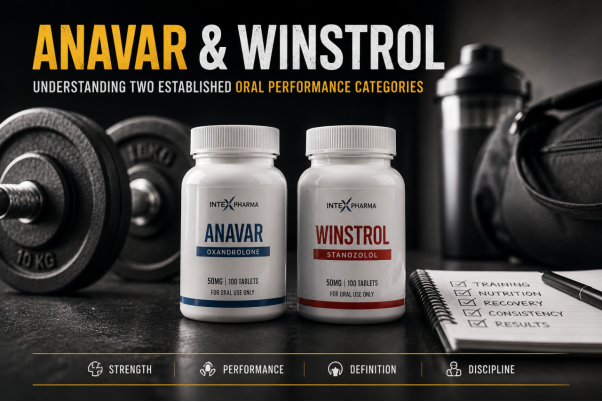
Within bodybuilding discussions, Anavar and Winstrol are two established oral anabolic steroid categories that frequently appear in conversations around physique-focused training. Although they are often discussed together, understanding their place within broader performance planning requires looking beyond simple comparisons.
The more useful perspective is to consider how athletes evaluate different categories, why context matters, and why training, nutrition and recovery remain fundamental regardless of the approach being researched.
Why Oral Performance Categories Continue to Attract Attention
Oral performance categories have long been part of bodybuilding culture because they are commonly discussed in relation to different stages of physique development.
However, popularity does not necessarily mean suitability.
Anabolic steroids can produce significant physiological effects and carry risks involving cardiovascular health, cholesterol, blood pressure, liver function, natural hormone production and other systems.
This makes education particularly important.
Rather than treating an individual compound as a shortcut to a particular physique, athletes researching these categories should understand how they fit into the broader picture of training and health.
Anavar and the Discussion Around Physique Development
Anavar is the commonly used name for oxandrolone, an anabolic steroid that has been discussed extensively within bodybuilding and strength-training communities.
It is often associated with physique-focused discussions where athletes are interested in maintaining muscular development while pursuing changes in body composition.
The Anavar oral steroids category represents one example of how the broader market is organised around specific oral performance categories.
However, a category or product listing does not establish that a particular substance is appropriate for an individual.
Oxandrolone is a pharmacologically active anabolic steroid, and its use can affect natural hormone production and other aspects of health. Medical supervision is therefore important when considering any anabolic steroid exposure.
Winstrol and Conditioning Discussions
Winstrol, commonly associated with stanozolol, is another established anabolic steroid frequently referenced within physique and bodybuilding discussions.
Its reputation is often connected with conditioning-focused conversations, particularly where athletes are interested in muscular definition and maintaining performance during demanding phases.
The Winstrol category provides another example of how oral performance products are organised within the wider market.
Again, the existence of a category should not be confused with evidence that its products are safe or suitable for a particular athlete.
Stanozolol can affect lipid levels, liver function and natural hormone production, among other potential concerns.
Why Context Matters More Than Popularity
One of the biggest problems with online performance discussions is the tendency to describe compounds in isolation.
A substance may have a particular reputation within bodybuilding, but its relevance depends heavily on the athlete’s circumstances.
Training age, body composition, nutrition, recovery, existing health conditions, medications and individual response can all influence outcomes.
This is why responsible research should focus on the complete context rather than asking which compound is simply “better.”
A more useful question is whether the underlying training and conditioning strategy is appropriate in the first place.
Conditioning Is Built Through More Than One Variable
A refined physique is ultimately the result of many variables working together.
Nutrition determines energy availability.
Resistance training provides the stimulus required to develop and maintain muscle.
Cardiovascular activity can contribute to overall fitness and energy expenditure.
Sleep supports recovery.
Stress management influences consistency.
None of these elements can be replaced by a single compound.
This is particularly important during cutting phases, when athletes may be tempted to make increasingly aggressive changes because progress appears slower.
A structured approach generally provides more useful information than repeatedly adding interventions.
Maintaining Training Quality
Performance during a demanding physique phase can fluctuate.
Reduced energy availability can affect strength, concentration and recovery. Excessive training volume can increase fatigue. Poor sleep can compound both problems.
For this reason, maintaining training quality is often more valuable than simply increasing workload.
An athlete can monitor key lifts, repetitions, training volume and perceived recovery to identify whether the programme remains sustainable.
If performance is declining consistently, adding more work may not solve the underlying issue.
Sometimes the more productive adjustment is improving recovery.
Nutrition Remains Central
Nutrition provides the foundation for body-composition changes.
During a gaining phase, sufficient energy and protein support the development of additional tissue.
During a cutting phase, an appropriate calorie deficit encourages reductions in body fat while adequate protein and resistance training help support lean tissue.
Extreme dietary restriction can create problems of its own.
Energy levels may decline, training quality can suffer, and adherence becomes increasingly difficult.
This is why successful physique development is generally built around nutritional consistency rather than constant experimentation.
Recovery Determines How Well Training Translates
Training creates stress.
Recovery provides the opportunity to adapt to that stress.
When recovery is inadequate, fatigue can accumulate faster than performance improves.
Signs may include declining strength, disrupted sleep, persistent soreness, reduced motivation and inconsistent training.
These signals should not automatically be interpreted as a need for another performance intervention.
They may simply indicate that training load, nutrition or recovery needs to be reassessed.
Understanding the Risks of Oral Anabolic Steroids
Anabolic steroids are not equivalent to ordinary sports supplements.
Even when a particular compound is widely discussed within bodybuilding communities, pharmacological activity means there can be meaningful health consequences.
Potential concerns vary by compound but can include:
- Suppression of natural hormone production.
- Changes in cholesterol levels.
- Increased cardiovascular risk.
- Blood pressure changes.
- Liver-related concerns with certain oral compounds.
- Mood and psychological effects.
- Changes in reproductive function.
Individual risk can also vary considerably.
This makes medical assessment particularly relevant before and during exposure.
Why Individual Response Matters
Two athletes can follow apparently similar approaches and experience very different outcomes.
Genetics, previous exposure, baseline health, training history, diet, sleep and other factors can all influence the response.
This is one reason anecdotal reports should be treated cautiously.
A forum post describing a particular experience does not establish that the same outcome will occur for someone else.
Reliable information should distinguish between established pharmacological information, clinical evidence and individual bodybuilding experience.
The Importance of Health Monitoring
Athletes who are concerned about the effects of anabolic steroid exposure should consider objective health monitoring rather than relying exclusively on appearance or performance.
Depending on the circumstances, healthcare professionals may evaluate blood pressure, cardiovascular risk factors, liver markers, lipid profiles and hormone-related measurements.
Monitoring provides information that cannot be obtained from training performance alone.
Feeling strong does not necessarily mean that all health markers are normal.
Likewise, a temporary decline in performance does not necessarily identify the cause.
Objective information provides a better foundation for decision-making.
Structured Planning Creates Better Long-Term Outcomes
The biggest difference between short-term and long-term performance planning is often structure.
Rather than moving randomly between gaining, cutting and recovery phases, athletes can establish clear objectives for each period.
A strength phase may prioritise progressive overload.
A hypertrophy phase may focus on accumulating productive training volume.
A conditioning phase may emphasise body-composition management while maintaining muscle.
A recovery period may focus on reducing accumulated fatigue and monitoring health.
This creates continuity.
Each phase contributes to the next rather than forcing the athlete to repeatedly start from zero.
Moving Beyond Simple Compound Comparisons
Anavar and Winstrol are often discussed together because both belong to the broader oral anabolic steroid landscape.
But the most useful performance discussion is not simply about ranking one above another.
Different compounds have different pharmacological characteristics and risks, while individual responses vary considerably.
A better approach is to understand the broader principles behind physique development and then evaluate health considerations within that context.
This prevents performance planning from becoming overly dependent on individual products.
Building a Sustainable Physique
Long-term physique development is measured in years rather than weeks.
The athletes who make consistent progress are generally those who can maintain their training, nutrition and recovery systems over extended periods.
That requires avoiding unnecessary extremes.
Progressive training, sufficient nutrition, quality sleep and realistic body-composition targets provide a more dependable foundation than constantly searching for a faster solution.
Performance categories may remain part of bodybuilding discussions, but they should never replace the fundamentals.
Final Perspective
Anavar and Winstrol have both established significant recognition within bodybuilding and performance discussions.
Understanding them properly requires more than knowing their reputations within the fitness community. It requires considering their pharmacological effects, potential risks, individual variability and the wider training environment in which they are discussed.
The strongest performance strategy remains one built around structured training, appropriate nutrition, recovery management and objective monitoring.
For anyone researching anabolic steroid categories, separating established information from anecdotal claims is equally important.
Ultimately, better physique development comes from better decision-making. The goal is not simply to find the most popular compound, but to understand the wider system, recognise the risks and make informed choices that support long-term health and performance.